Projective geometry
This film is designed to be an introduction to the projective geometry concepts of a point at infinity and a line at infinity. Projective geometry is concerned only with properties of co-incidence, i.e., properties which are invariant under stretching, translating or rotating the plane. Projective geometry is considered the most fundamental of geometries because co-incidence is such a basic property.
One of the potential advantages from the study of projective geometry in schools is that it allows for consideration of a second geometry (as well as the more standard Euclidean one). In offering a second system of geometry we can raise awareness of how mathematics makes assumptions and then follows through implications. Truths are therefore always relative to assumptions.
My suggestion for working with this film would be to first introduce students to two axioms of projective geometry.
Axiom 1: There is 1 point common to any 2 (non-identical) lines.
Axiom 2: There is 1 line common to any 2 (non-identical) points.
This is sufficient to begin work. These axioms (as will become apparent) are likely to contradict common (Euclidean) sense but they can and do lead to a consistent and quite beautiful geometry. Qualities such as parallelism no longer apply, there is no angle measure used in projective geometry, in fact measure is not used at all, except to consider relations of measures (e.g., ratios of distances, which remain invariant under stretching, etc).
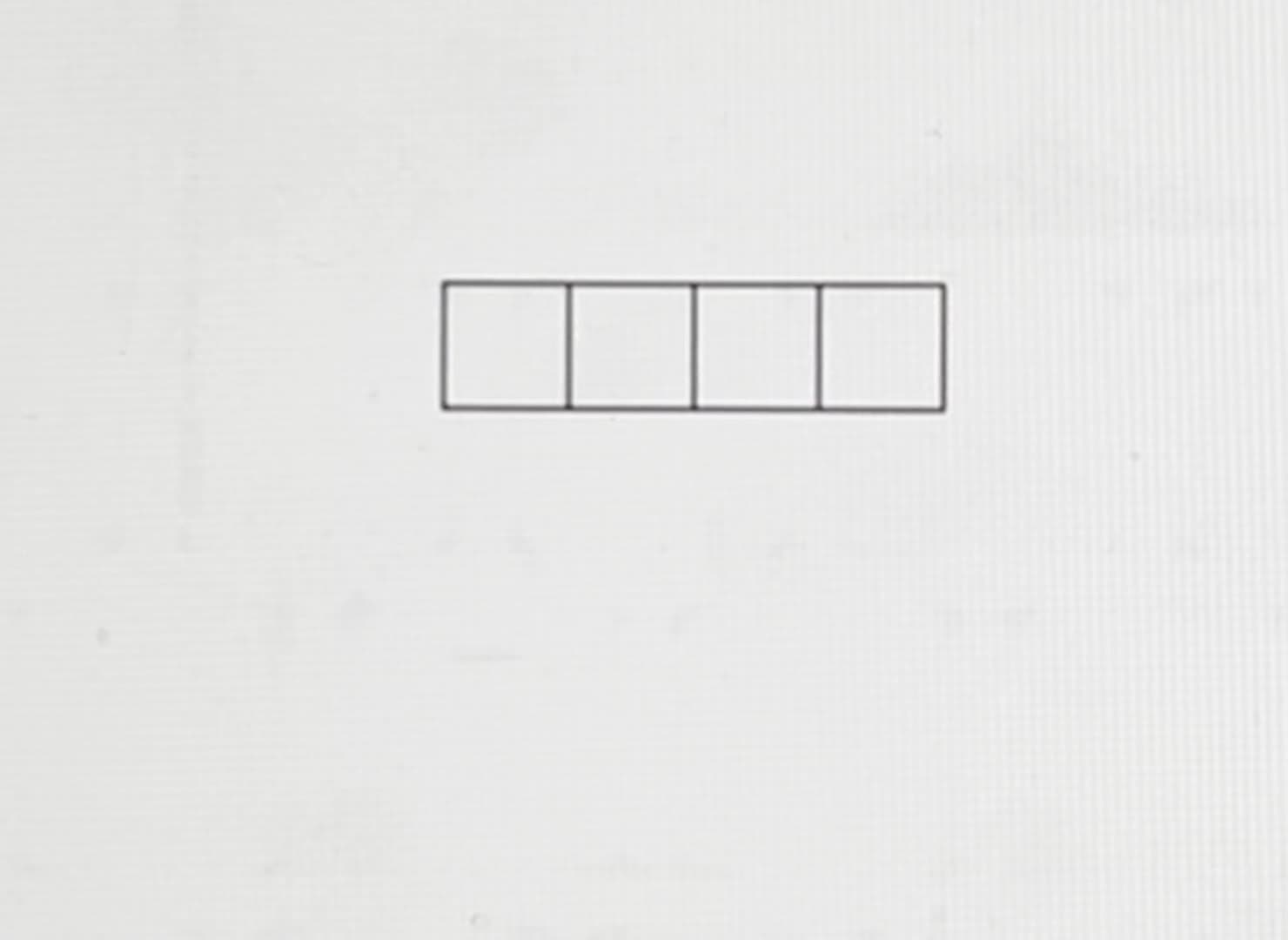
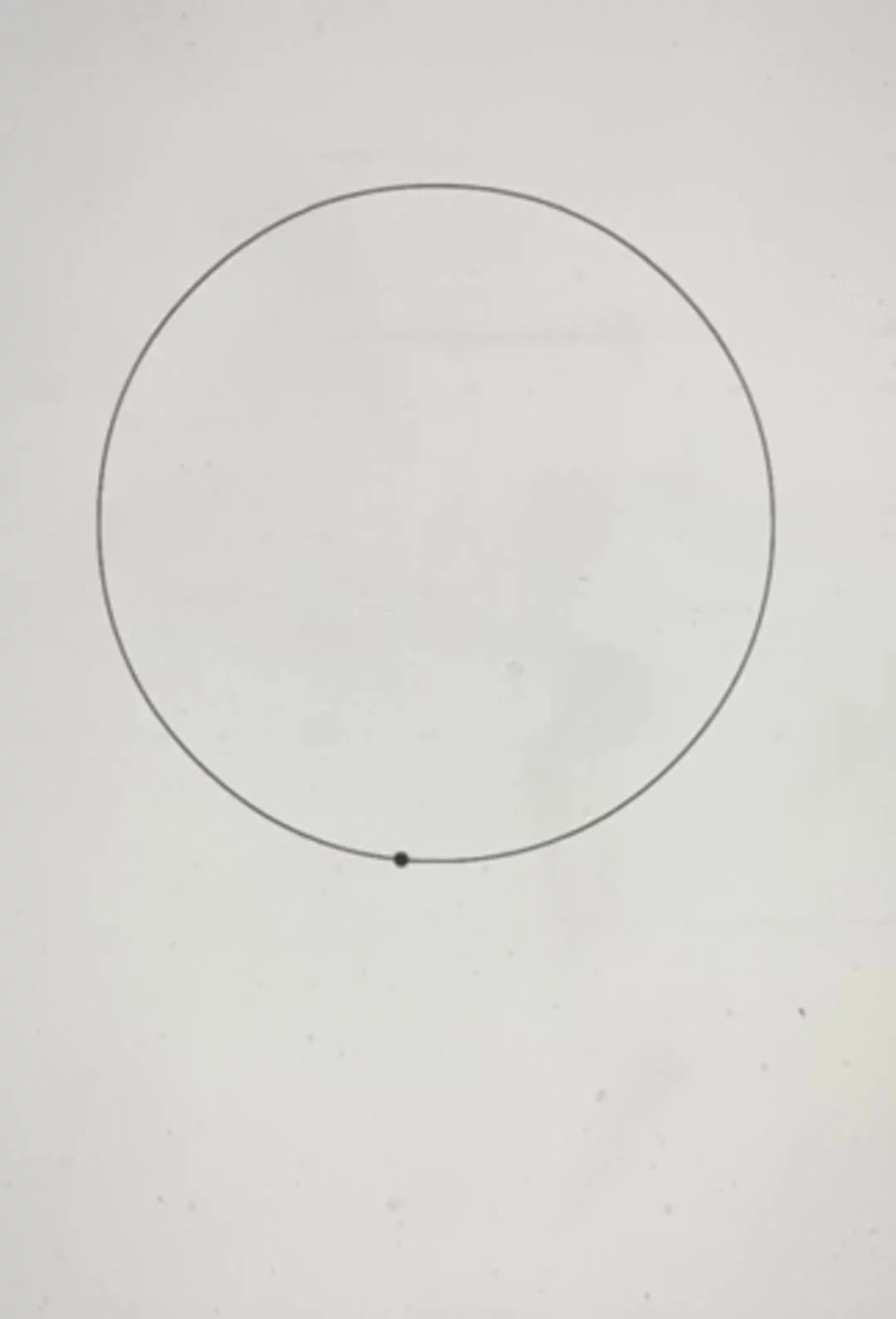
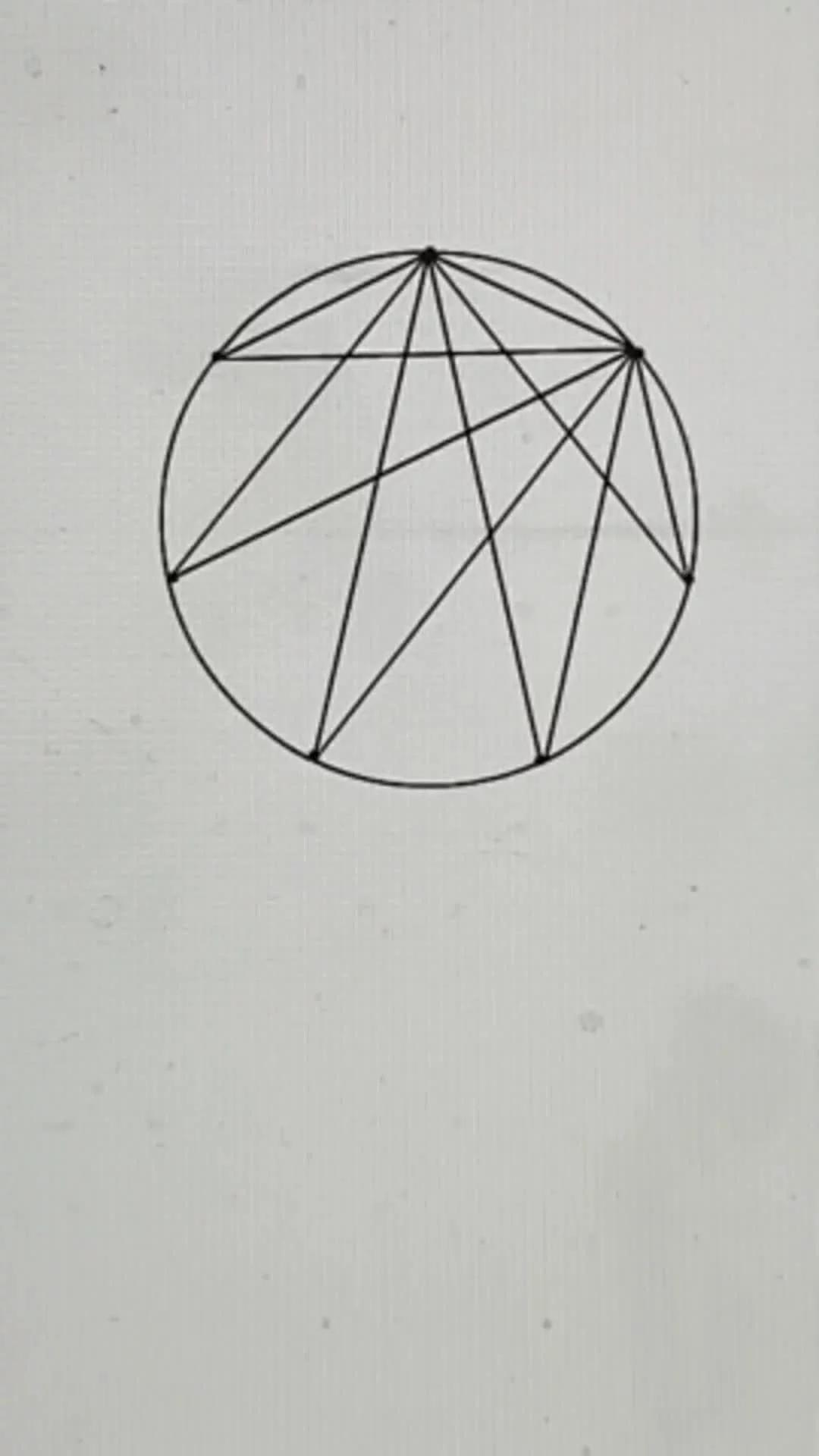
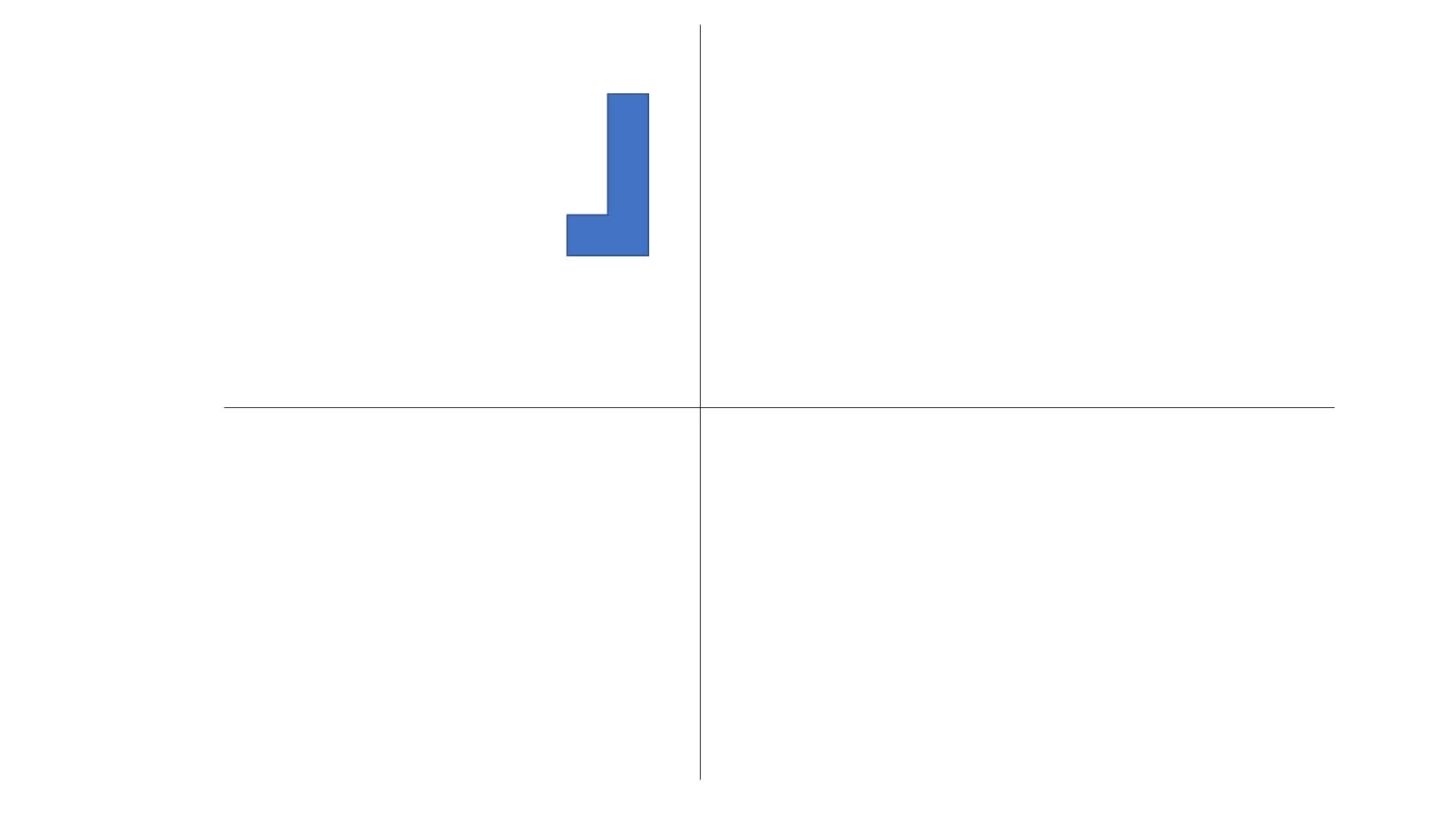
The film is split into 4 chapters, each demarcated by a pause. I would recommend working on each section sequentially, pausing to discuss after each chapter. At each pause, invite the class to say what they see, before trying to reason from the axioms as to what has been observed.
Chapter 1
This section is designed to draw attention to the point which is common to the fixed and rotating line. The rotating line stops when it looks “parallel” to the fixed line. A natural question to ask (that can also be provoked) is: where is the point common to the lines (from axiom 1) when the rotating line stops?
The axioms force us to conclude there is a single point “at infinity” that can be reached in two different directions, and that is common to both lines.
Chapter 2
This short chapter introduces a second fixed line, in the same direction as the first. Again, questions arise at the point when the film stops: do the three lines meet at a single point “at infinity” or do they meet at different points?
Some language or labelling may be useful here (the need for this may arise from discussion amongst students). We could call the lines (from left to right) a, b and r (for the rotating line). Chapter 1 tells us that the point at infinity of b is the same as the point at infinity of r. By the same reasoning, the point at infinity of r is the same as the point at infinity of a. Hence, all three lines must have a common point at infinity. The argument extends to all lines in the same direction.
Chapter 3
A new fixed line is introduced, in a new direction. When this chapter ends, the rotating line appears to be “perpendicular” to this new line. Having established that all “parallel” lines share one point at infinity, the question here is whether a line in a new direction meets the rotating line (r) at a new (different) point at infinity, or whether it meets at the same point we had been considering in Chapters 1 and 2?
Labelling can again help. We can call the new line, m. The original fixed line (b) and (m) cross at a point on the screen. From axiom 2, a pair of lines have one common point, therefore (b & m) cannot also share a point at infinity, or else they would meet at two common points. Hence the point at infinity where (m & r) meet is a different point to where (b & r) meet.
Chapter 4
In this Chapter a second rotating line appears (we can call it line s) and a red line appears. This red line joins points that travel along line m and line b (where they are crossed by lines r and s). As lines r & s rotate, the points on m & b move away to infinity at the same speed. When these intersection points reach infinity, the red line has become a “line at infinity”.
Alternatively, given that the points at infinity of line m and line b are different points, axiom 2 tells us there must be a line joining them (a line at infinity). The line at infinity somehow appears to encircle the plane. “We reach with our thought beyond the confines of measure … the infinitely distant … is not perceptible through the senses; but it is a clear and exact thought” (Whicher, 1971, pp.69-71, emphasis in original).
References
Whicher, O. (1971). Projective geometry: creative polarities in space and time. Rudolf Steiner Press: London.